codex exerro

Nick's personal blog

From Wordpress to Octopress

Baked Blogs - not for everyone…

I’ve neglected this blog over the past year or so, and all of the infrastructure. nickt.com was hosted with Media Temple (mt), and a great job they did too. Solid uptime, great communications and extremely responsive customer service (on the rare occasions I had to call upon them for support). However, it was costing me over $600 a year, and while at one time that was ok, my needs have changed and I no longer need a dedicated VPS and complicated hosting.

I’ve used Amazon Simple Storage Service (S3) in the past, but as I was using it to backup gigabytes of photos and videos it started to get expensive and I stopped using it. However, it seemed an ideal place to stick a blog as it’s storage requirements are modest. S3 buckets can be setup to serve static content, which is an ideal way to move away from the complexity of mysql and PHP.

Last week, reading Hacker News I can across Matt Gemmell’s article on Octopress and was inspired to get to a baked blog, and read a few more articles. I quickly setup S3 but the time-consuming part was setting up my client Mac with the Git/Ruby/Jekyll/Octopress environment. Here’s how I did it:

  1. Installed the latest Xcode from the App Store.
  2. Installed Macports.
  3. Installed git from Macports.
  4. Setup git.
  5. Ruby Version Manager from Macports won’t install on OSX Lion so I installed homebrew.
  6. Installed wget from homebrew.
  7. Installed RVM from homebrew.
  8. Installed Ruby 1.9.3 (the version OSX 10.7.2 ships with is 1.8.7 and Octopress needs 1.9.x).
  9. Installed (cloned) Octopress from github.
  10. Installed the Ruby Gem Bundler.

And that got it installed on two of my Macs. I have the slightly scary setup of using Dropbox to sync across my Macs, and the git repositories are in Dropbox. As I’m the only editor, and the files are small (so very fast syncing), I don’t think it’ll be a problem.

Migrating posts from Wordpress

Now this was trickier. There are basically two options. Use the database and run some sql and hopefully everything will be converted from HTML to markdown. You can read about that here and here or dump the XML from Wordpress and run the exitwp script. There is also a forked version of exitwp.

Initially I couldn’t get the script to work. I found a hint here, and that helped me make the following changes:

parallax:exitwp nickt$ git diff

diff --git a/exitwp.py b/exitwp.py
index 4dd9c83..0aeb6bb 100755

def html2fmt(html, target_format):
-    html = html.replace("\n\n", '<br>')
-    if target_format=='html':
-        return html
-    else:
-        # This is like very stupid but I was having troubles with unicode encodings and process.POpen
-        return html2text(html, '')
+    #html = html.replace("\n\n", '<br>')
+    #if target_format=='html':
+    #    return html
+    #else:
+    #    # This is like very stupid but I was having troubles with unicode encodings and process.POpen
+    #    return html2text(html, '')
+       return html

And after removing that chunk of code I had all of my Wordpress posts ready to move to my new Octopress blog. That said, not everything is clean. Not only are there some formatting errors but not all of the HTML was converted to markup. But, with all the files in a format that mostly works, I can clean them up at my leisure, though if it never happens it doesn’t matter…

Now all I have to do is write more.

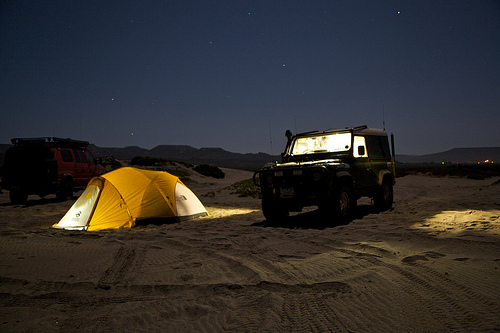
Camping in the Desert

Desert Camping

I like camping in the desert.
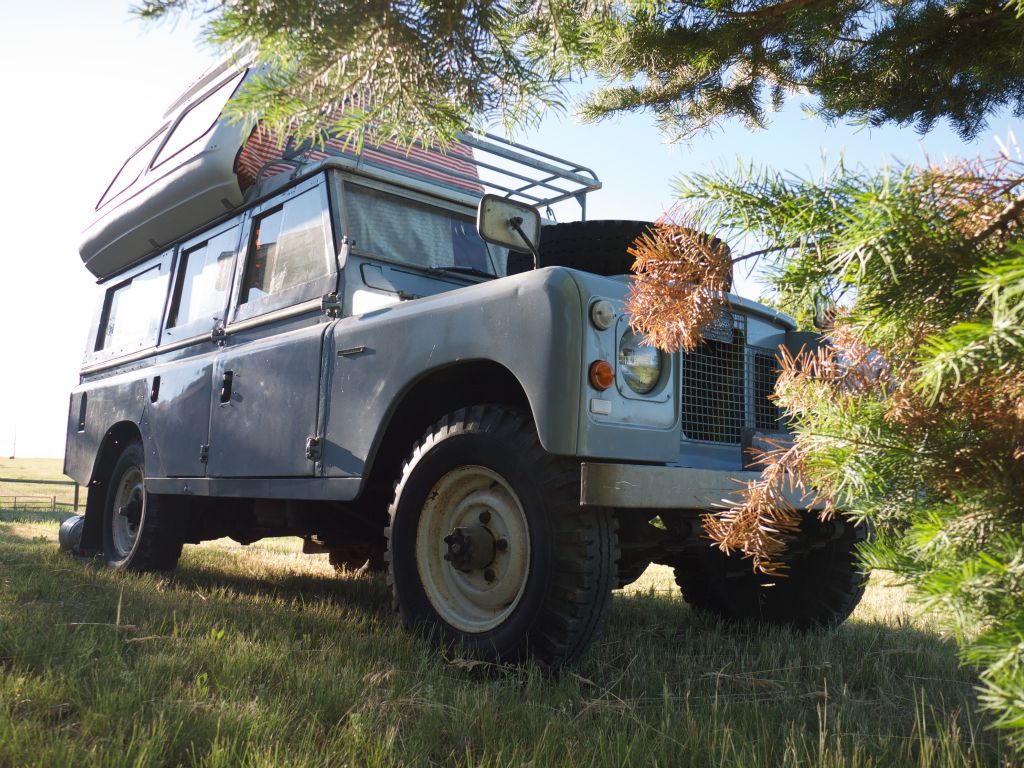
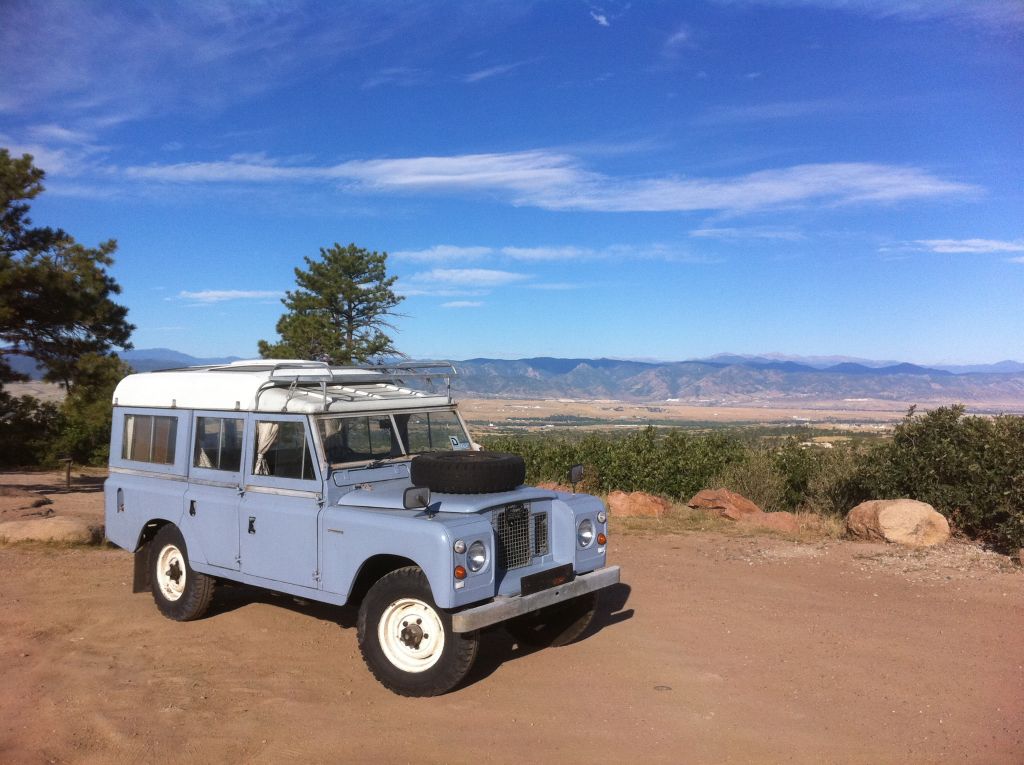
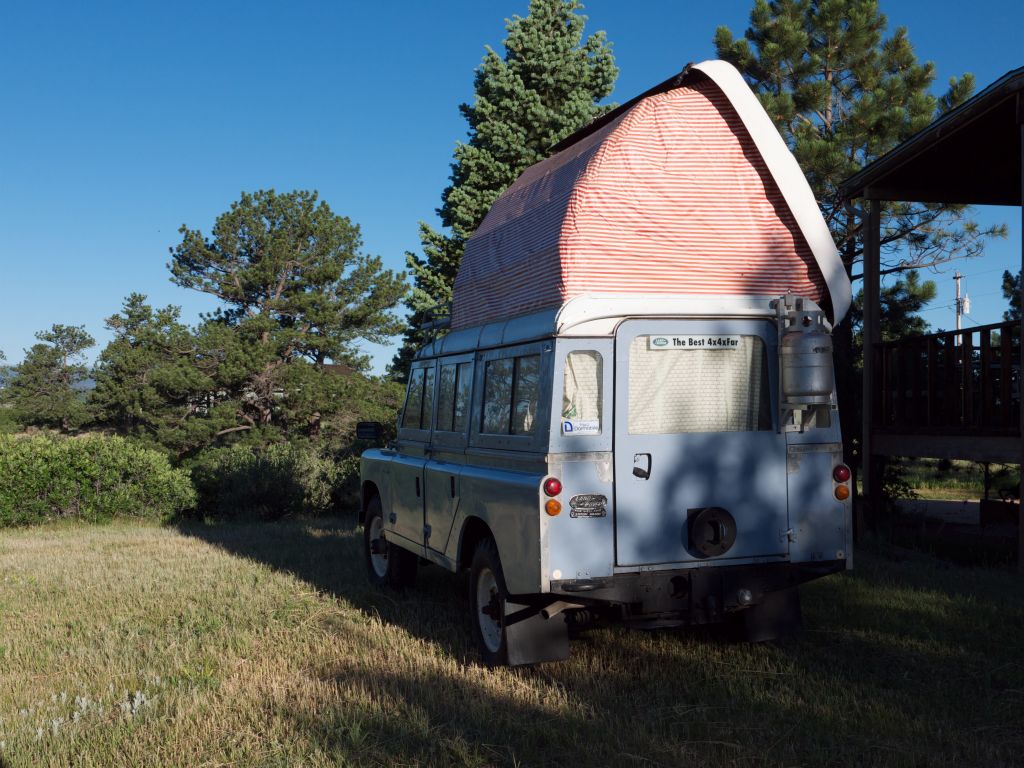
The Defender is the best way to get there…

iPhone Location Tracking

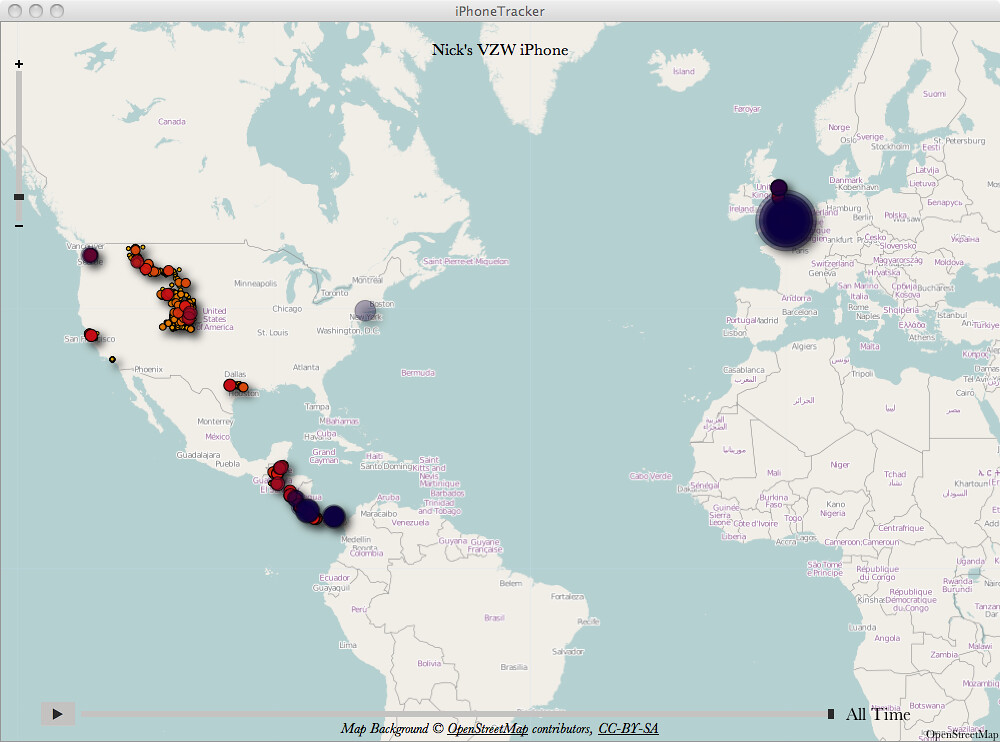
There has been a lot of chatter this week about iPhone location tracking. I downloaded the iPhoneTracker app to take a look. This app finds the latest backup on your Mac, and pulls the lat/long data and presents it on a zoomable map.

Here’s my results:

iPhone Locations

I noticed something I didn’t expect. I have a Verizon iPhone and I don’t take it when I travel internationally. The points you can see on the map in Europe and Central America come from data collected from my last GSM-based iPhone 4. When I moved to the new phone, I did a backup and restore.

So if you do this, the consolidated.db data contains location data from all your iPhones, not just your current one.

Inmarsat & the IsatPhone Pro

I’ve used an Iridium satellite telephone for years. It’s an insurance policy - I travel all over the world, and to remote areas in the US and having the ability to have simple and reliable two-way communications is worth the $40 per month standing charge (and about $1.50 per minute).

Iridium uses a constellation of 66 operational satellites in low Earth orbit, and is the only satellite telephone communications company that gives complete global coverage, even at the poles.

My handset, a Motorola 9505, is large, bulky, heavy and slow - it’s starting to show its age. After a software upgrade a few years ago, it’ll now send SMS messages and emails, and there is also a data connection kit (with a DB-9 serial connection), though at a maximum of 2.4kbps, it’s barely usable and once I had the ability to send SMS messages and emails, I gave up using it.

I put up with both the age of the handset and almost $500 per year of standing charges as there were no other options (other providers didn’t give the coverage I require).

Lately, however, Inmarsat, a well-know satellite communications company unveiled their new satellite phone, the IsatPhone Pro. It’s still like a cell phone from the year 2000, but it’s lighter, faster and more compact than the Motorola 9505. It uses the Inmarsat 4 constellation of satellites, 3 birds in geosynchronous orbit to give almost global coverage (the exception being the polar regions). These are the same satellites that provide the BGAN service.

As well as the phone being better, the service is also cheaper - the basic service is $20 per month, so it’s half the cost of the Iridium service.

This convinced me to get one. In July 2010, you can find brand new ones for around $500.

IsatPhone Pro

My quick testing shows that it performs well, though as I’ll only ever be in the footprint of one satellite (and you get the best service if you point the antenna at the satellite - so you need to have a general idea of where it is), the coverage in more challenging areas (canyons, forest, etc.) may not be as good as the Iridium network.

Out of the box it comes with the ability to send both SMS messages and emails, and has a built-in (Navstar) GPS, from which you can email position data (a fantastic feature from a safety and security perspective). Sending and receiving both SMS messages and emails is speedy, with a delay of just a few seconds between sending and receiving.

In summary the IsatPhone Pro is better, faster and cheaper than the Iridium/Motorola 9505. I’m liking it so far, and I think it’ll make satellite phone ownership available to more people.

Recommended. Field testing from Central America coming up soon!

Trivia Seems Like a Poor Description….


Image courtesy of Azcolvin429

There are 2(1011) to 4(1011) i.e. upto 400,000,000,000 stars in the Milky Way Galaxy (that’s four hundred-billion, using the short scale). That’s our local neighborhood.

The Milky Way is part of the ”Local Group” of around 30 galaxies, and is the second largest, after the Andromeda Galaxy (1012 - 1 trillion stars).

This group in turn, is part of the ”Virgo Cluster”, which comprises of 1,300 to 2,000 galaxies.

The Virgo Cluster, is the heart of the ”Virgo Supercluster”, which contains at least 100 galaxy groups and clusters.

There are millions of superclusters in the observable universe.

Amazing. Now I don’t feel so bad about not getting my chores done, even if the universe is just a giant computer!

“Cooling Energy-Hungry Data Centers”

G. I. Meijer of IBM Research in Switzerland recently published an engineering paper called “Cooling Energy-Hungry Data Centers”, you can read the abstract here, and you can read the whole article if you’re a AAAS member.

He makes a great argument for liquid cooling in the data center, something I’ve been an advocate for a long time. It boils down (ha!) to something simple:

Heat capacity of air: 1 MJ m–3 K–1 Heat capacity of water: 4 MJ m–3 K–1

Clearly, the heat capacity of water, and other liquids, is far greater than air.

Interestingly, he’s not just talking about re-engineered cabinets which use liquid cooling to cool the air before and after it has been ducted through hardware, which certainly helps and while it isn’t common it isn’t rare, but rather he advocated the use of microfluidic heat sinks (using microchannel heat sinks and liquid cooling) at the transistor level to alleviate the heat issues caused by leakage currents at the gate oxide (we currently loose more in leakage currents than are consumed by computation). As we move from 45 nm through 32 nm to 22 nm packages in the next few years, this issue will accelerate - thermodynamics is still your daddy.

He estimates that using cooling water at 60C-70C will protect the microprocessors from overheating, and alleviate the need for chillers to operate at the extent they do today (or at all at certain times of year, probably depending on your local environments ambient temperature and humidity) - with a 50% reduction in data center energy consumption. A second benefit is that collection of the waste heat becomes easier, with applications in office and district heating and some industrial applications.

Anything we can do to reduce the 330 TW·h of energy in data centers globally (2009 estimate) is a good thing, right?


Science 16 April 2010: Vol. 328. no. 5976, pp. 318 - 319 DOI: 10.1126/science.1182769

The 2010 Overland Expo

I’ve been an “overland” traveler for way over a decade, and simply an avid traveler all of my life. There are a number of reasons for this, and as I see more places and interact with more people whose backgrounds are very different to mine I can feel my reasons for traveling are slowly changing (that’s a whole other story). Although I love my Land Rovers (I refer to them as “pets”), and I’m a fully-fledged tech-guy, both the vehicles and the technology are simply enablers for me to travel to the places I want to go, experience them in many different ways and to communicate from them and tell stories about the people and places when I return home.

This time, I’m just back from the 2nd Overland Expo. What a great event! Even though I was involved in the 1st Expo and was asked at that event to present and do some driver training this year (by Graham Jackson of Overland Training), it wasn’t until I rolled into the event that I fully understood the scale. It eclipsed last years event in many ways, many more vendors, better training facilities, much better rooms for AV presentations, a knockout team of staff, instructors and presenters and finally a fantastic audience of folks who love to travel. I couldn’t believe how many great vehicles were parked in the car park.

Overland Expo 2010 kickoff meetingOn the driver training trail at Overland Expo 2010.

It’s not really about the vehicles though. I know a great many of us enjoy building them, tinkering with them and driving them, but really they are just another companion on the journey. A great many of the vendors realize this (and they realize we spoil them), and are on-hand to help us do this. My personal favorite piece of vehicle kit was the Kaiser / Nekarth Differential Locker, a much simpler and more elegant approach to locking differentials than the Detroit and ARB solutions. I saw this demo at the Expeditioneers booth.

Kaiser differential locker

The Expo is not just about the vehicles (and they ranged from pedal-bikes, through motorbikes, regular 4x4 vehicles to huge ex-military and custom built behemoths) and their parts and accessories. Other vendors offered medical equipment and training (and Remote Medical International staged some great demos), guiding services (notably No Limit Expeditions offering adventures in Belize and the rest of Central America and Safari Drive based in various African locations), clothing (including one of my favorites, Mountain Khakis - recommended!), tents (roof-top and otherwise), all sorts of camping/expedition gear (including Bug Out Bagz), the list is long and distinguished.

Seminars and presentations are a key part of the Expo, and if you just attend one or two of them you would realize that “overlanding” isn’t just 4x4 driving - and very different from what usually pops into peoples minds when the outdoors and 4x4 drivers meet… I talked about staying online and in touch while on an international overland trip, and driving through the Sahara in a VW Golf! Other presentations and panels discussed medical responses, overlanding with dogs, solo overlanding, cooking demos (very popular I understand), and some great overland movies courtesy of Austin Vince and the Adventure Travel Film Festival.

Groups and clubs are also prominent at the Expo. It’s always great to see the Disabled Explorers and their WAVE Sportsmobile, really giving folks the opportunity to get out and explore who normally may not have the chance to. I love the ideas behind both the Carbon Neutral Expedition and the Vanishing America Project (Overland Society’s Expedition Flag ambassador for 2009), and again, the Muskoka Foundation is making a difference around the world.

My favorite part is the opportunity to see old friends and meet new ones. One moment sticks in my mind, during a basic vehicle overview session I was one of the instructors. After the other instructors had said their piece, I was my turn to add something. Trouble was, three of the instructors were Tom Collins, Duncan Barbour and Jim West, 3 Camel Trophy luminaries, and a hard act to follow! Having the opportunity to talk to people like this is wonderful - and the chance is there for everyone who attends, especially at the ever-popular happy hours each evening! I particularly enjoy spreading the word, or “preaching the gospel of travel”, as a friend once told me. I think retelling great stories and sharing experiences really gets people fired up for that first trip. Helping them over the “well, it’s a dream I’ve always had, but I just can’t get the time off work” is usually the first part, and not that difficult in the environment the Expo creates.

Once people have traveled off the beaten track they come back home with new eyes, none more so than Americans (not a dig, just an observation). Through their new eyes they see people, politics and the Earth in a different light. A more tolerant, understanding and sympathetic light. An ability to put themselves in the other persons shoes and see that there are many more sides to national and international issues than you’ll ever see on the typical “never mind the quality, just look at the quantity” news channel (which is why I refuse to watch television news - that’s another story). Anything which opens peoples minds and makes for a more tolerant and understanding society clearly should be encouraged; I’ve always advocated international travel for this purpose and the Overland Expo is the ideal platform to encourage people to embrace this.

My Review of MSR Reactor Stove System

Originally submitted at REI

Backpacker April '07 says for 1-pot meals, ''…MSR Reactor™ offers a whole new level of convenience, speed, and trailworthiness.''


Great, powerful stove, but has issues…

By nickt from Colorado on 4/12/2010


4out of 5

Gift: No

Pros: Powerful, Easy To Clean

Cons: Poor temperature control, Difficult to Light

Best Uses: Car Camping

Describe Yourself: Avid Adventurer

What Is Your Gear Style: Minimalist

Pros:
1. It’s extremely fast, I boil a lot of water so this is a huge win for me. Subjectively, it takes around 1/3 less time to boil water versus the JetBoil. This is due to the more powerful burner and larger surface area on the burner interface.
2. It packs small, and as it’s wider than a JetBoil, you can pack a 220g (7.8oz) gas cylinder inside it, whereas the JetBoil can only contain a 110g (3.9oz) cylinder internally (so I always packed an additional large 450g (15.9oz) cylinder).
3. It comes with a small packing cloth which stops the insides getting scratched when the burner unit is packed inside (yes, you could easily make this yourself, but it’s a nice thought to provide one).
4. The whole unit it the typical good quality you’d expect from MSR.
5. It’s wider than the JetBoil, and that makes it easier to clean.

Cons:
1. It’s more expensive than the JetBoil ($160 vs $100 using REI prices in April 2010).
2. Simmering is difficult, if not impossible. The burner is so powerful it seems to have only two settings, off and “supernova”!
3. No piezo ignition! It’s a pain to use matches or a lighter.
4. Bigger burner means it goes through gas faster, though as you can pack a larger cylinder internally it may not be an issue.
5. It is slightly larger than the JetBoil, the diameter is larger but it is shorter.
6. It has a fold-out handle, the JetBoil is insulated so you can simply pick it up with your bare hands even when hot.
7. As the diameter of the pot is wider than the JetBoil, it is slightly more difficult to pour into narrow containers.

http://nickt.com/2010/04/12/msr-reactor-stove-review/